


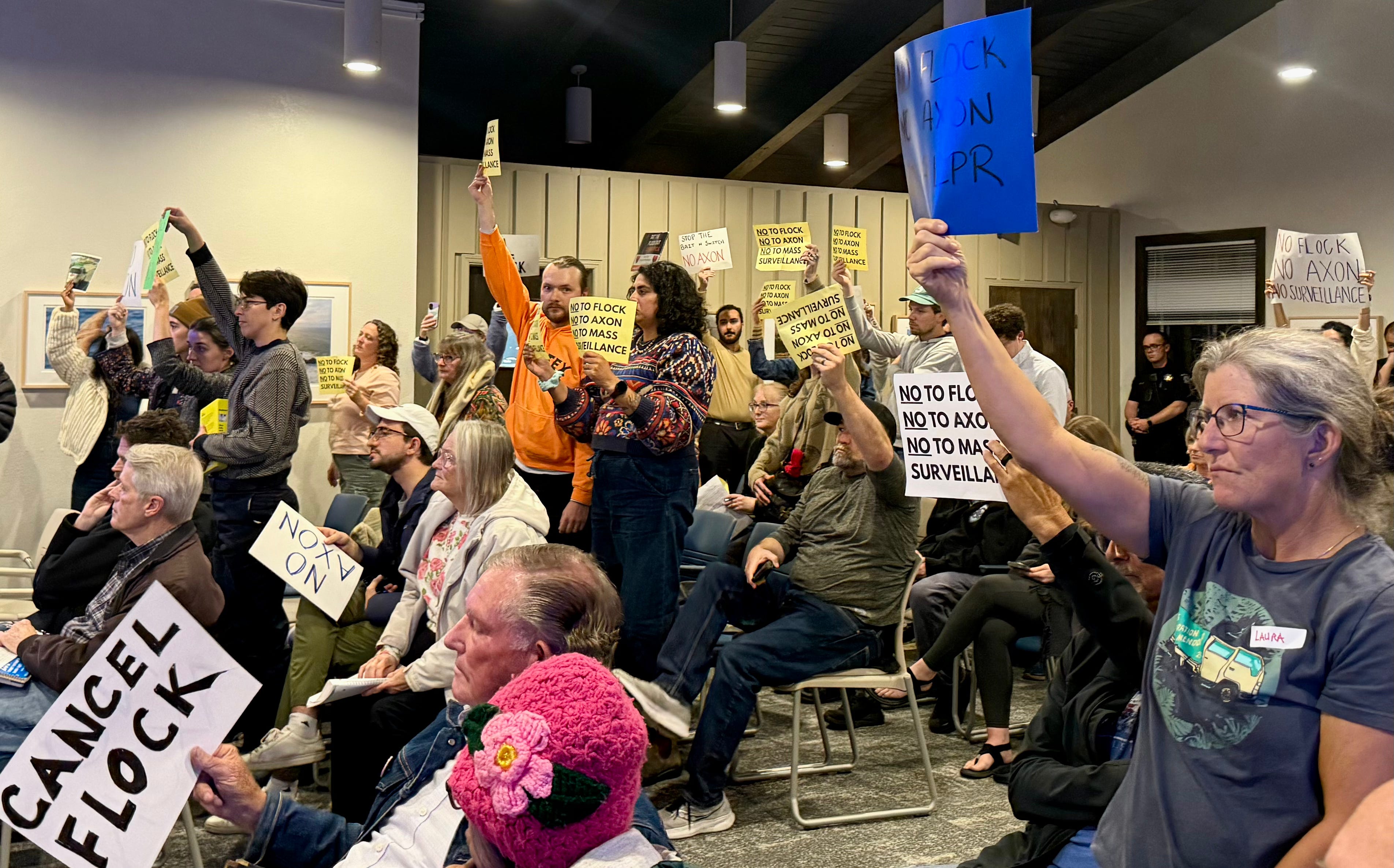
Pacifica City Council voted Tuesday not to renew its contract with Flock Safety, opting to continue discussions about moving forward with another automated license plate reader vendor.
Council voted unanimously to end its agreement with Flock, but postponed a decision on a proposed five-year contract with Axon until Nov. 23 after the meeting ran past midnight.
Mayor Christine Boles said she still had questions after hearing over 40 residents speak during public comment.
Councilwoman Mayra Espinosa said it’s hard to trust other agencies when sharing any information collected by the cameras.
“That’s probably the concern of the community,” Espinosa said.
The proposed contract with Axon would reduce the number of agencies the city shares information from 283 to 72 after hearing the community’s concerns, Police Chief Maria Sarasua said. The city information technology department would also audit every search quarterly.
Working with Axon for $24,793 annually would be cost-effective compared to Flock, which was $30,000 annually, according to Sgt. Eric Martinez. The city would now own its 10 cameras under the Axon contract rather than lease them, as it did with Flock, he said.
The cameras would help assist the understaffed police department, which has 28 available officers, its lowest staffing level since 2014, Martinez said. There are six vacancies and eight positions have been eliminated, Martinez said.
“When people come into Pacifica, you’re not going to see a Pacifica police officer because there are none available,” Sarasua said.
The cameras would serve as a visual deterrent and alert officers when a car associated with a crime is detected, she said. Data would be deleted within 30 days.
Before finalizing the proposed contract, Sarasua said she made sure it reflected the community’s input from outreach meetings held between August and November and the report released by the San Mateo County Civil Grand Jury. The report raised concerns about whether there were enough guardrails on how data is shared.
Over 40 residents spoke during public comment, with a clear divide of 30 opposed to the camera and 18 in support, according to City Manager Sean Charpentier.
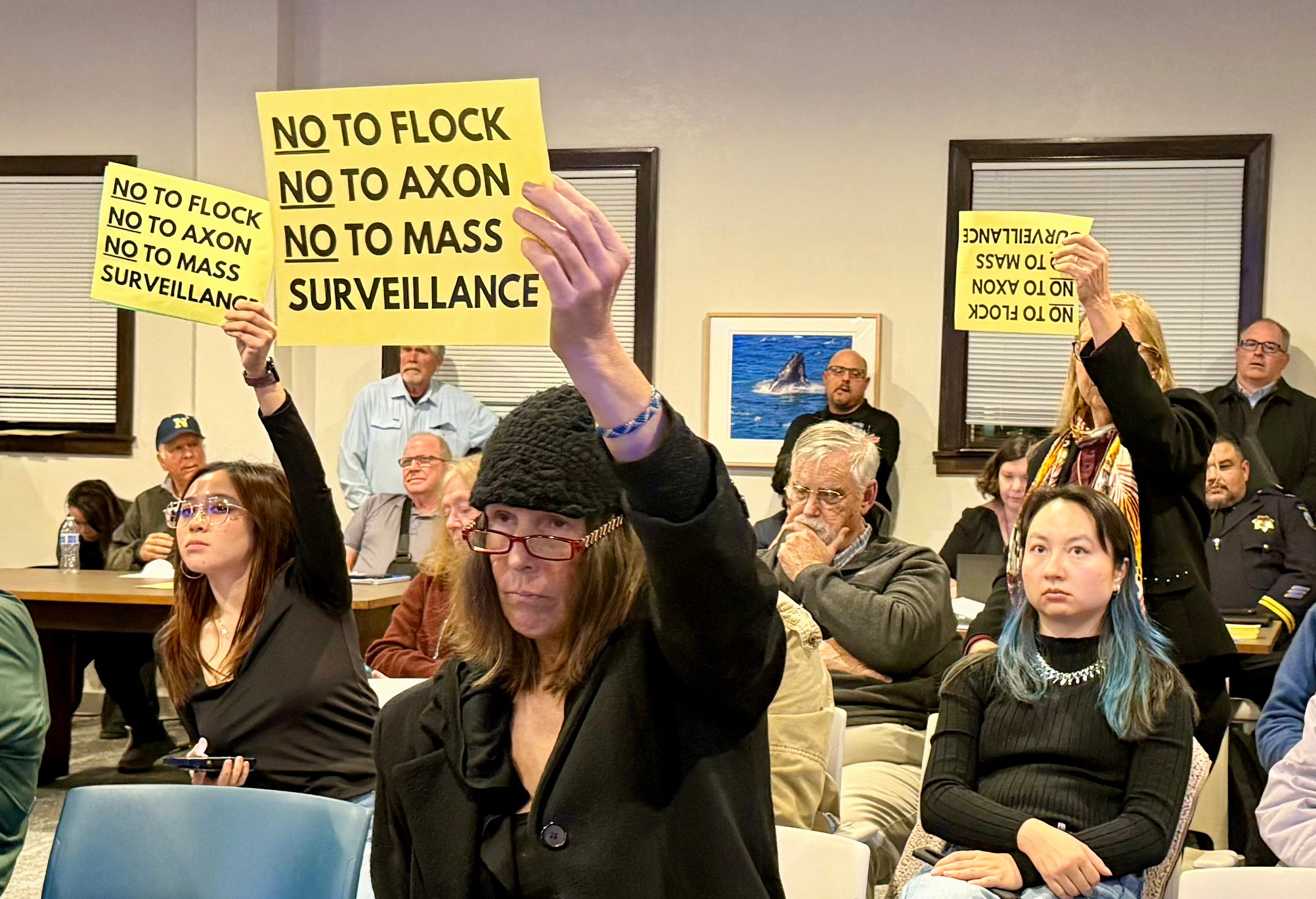
“I want privacy for myself and for my neighbors. I’m disappointed to see our feelings relegated to being pro-crime and just pro-non-safety,” said resident Page Lie.
Lie said there’s a camera on the sidewalk in front of Walgreens in Manor, the city’s only pharmacy, which invades people’s privacy when they get contraceptives.
“The other existing cameras in this community are by restaurants, preschools, tow yards, grocery stores, laundromats, gas stations, churches,” Lie said. “We cannot avoid them. Mass surveillance harms all of us. It assumes guilt before innocence and is a violation of our constitutional and civil rights. Changing platforms from Flock to Axon solves nothing.”
After hearing that the location of a camera two blocks from a school concerns residents, Sarasua said it will be moved.
“That’s again part of the collaboration. When we curate this together, and we hear this feedback, it is our imperative to be responsive to that,” Sarasua said.
Sue Vaterlaus, a former council member who voted to approve the license plate readers, said there was no objection at the time.
“There have been mistakes over the country where things have happened that were wrong. It’s not the norm,” Vaterlaus said. “ We don’t have the money for a police officer, but we have the money for this tool that they can use to help them.”
Although most residents who attended opposed the cameras, Vaterlaus said supporters stayed home because they did not want to face a crowd that would berate them.
Neighboring cities, such as Daly City and South San Francisco, use Axon cameras, according to Senior Sales Manager Danielle Valdez.
Boles said Axon’s ties to ICE weigh heavily on her amid the 12 ICE arrests reported by Faith in Action Bay Area, six occurring in South San Francisco.
The responsible way to move forward would be to answer all of council’s questions, Sarasua said.
Council will continue its discussion and make a decision on Nov. 23. If council moves forward, Axon will set up new cameras within 30 to 90 days.