


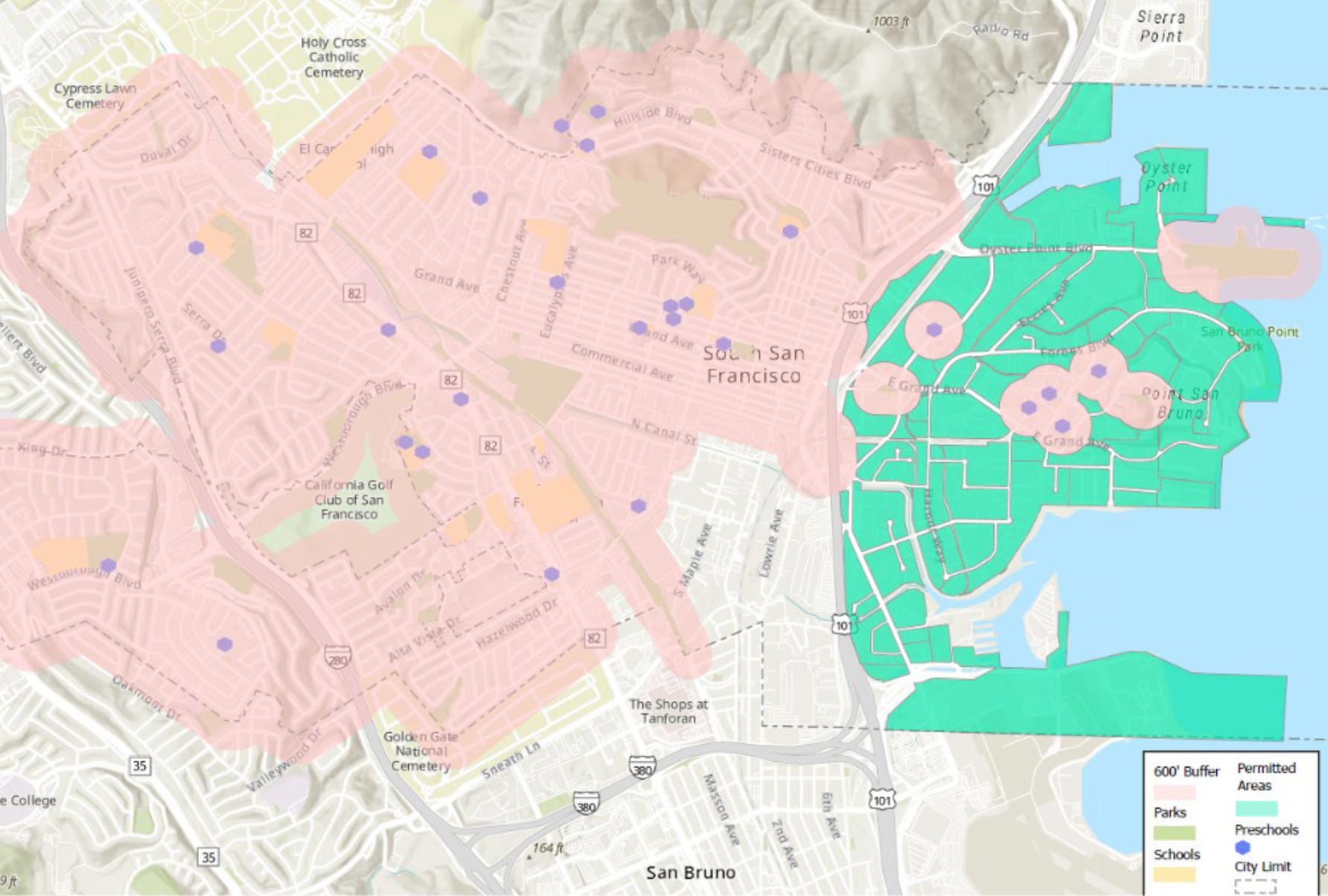
South San Francisco City Council is considering whether to allow cannabis storefronts east of Highway 101.
During a study session on Sept. 9, Council discussed where cannabis storefronts could open — after making it a priority earlier this year — since they are not currently allowed. The city currently allows only weed delivery, testing, manufacturing, distribution and indoor cultivation, according to associate planner Cecelia Mariscal.
Council had the option to look into allowing cannabis businesses on El Camino Real and Highway 101. Most disagreed with permitting storefronts on El Camino Real because it would be too close to residential areas.
“I think east 101 is a natural place to start and hopefully we get all that freeway business. A lot of people, I guess, want to get off the freeway and get high and then get back on,” Mayor Mark Aadiego said.
Councilman Mark Nagales said there would be neighborhood pushback if council moved forward with allowing cannabis storefronts since they would be too close to schools.
“I think if we decide to move forward with this, we do need to get feedback from the community to see how they would feel to have [storefronts] within residential areas,” Nagales said.
He recommended a phased approach, with the council reevaluating in a couple of years to gauge the community’s appetite.
Councilman Eddie Flores, who represents District 5, which covers east of Highway 101, agreed with Nagales. He said children who go to the library, parks, recreation centers, and organizations on El Camino Real would be exposed to the storefronts. Flores said allowing cannabis businesses east of Highway 101 would bring potential customers traveling near SFO.
Only Councilman James Coleman was open to storefronts on El Camino Real because, although they would be close to where minors hang out, dispensaries require ID to enter — unlike supermarkets, where alcohol is visible and minors could still enter.
Council agreed to cap the amount at two storefronts and use a lottery process, while still prioritizing existing businesses.
Farhad Doctor, the founder and CEO of Sticky Thumb Delivery, which has been around since 2020, said a lottery system to pick which business gets a storefront would be unfair, as big businesses may skew the pool.
“They have the money to do this and it actually could adversely create an unfair playing field,” Doctor said during public comment.
City employees will now draft an ordinance for council review at a future meeting in 2027.